Showing posts with label Week 3. Show all posts

Monday, February 8, 2016

Indian Epics Topics Brainstorm

1. Sages in The Ramayana: As I have mentioned in a previous post I think that the idea of humans as advisers and sometimes punishers to the gods adds a very interesting dynamic to the story. I would like to explore the role of sages in Hindu culture and write a story based on the journeys and abilities of these characters.

Research: Hinduism is often considered to be the oldest religion in the world because it's origins do not date back to a particular period or prophet. This religion derives much of its authoritative figures from the experiences of sages as their knowledge is considered to be sacred. Much of this information is obtained through A Tribute to Hinduism and All About Hinduism publications.

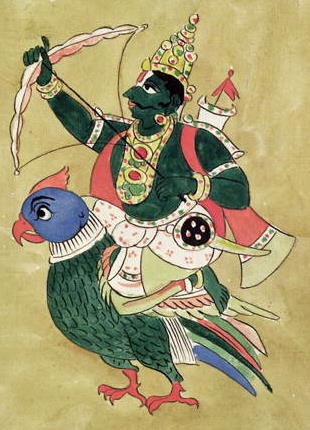
2. Love as a Disease: Throughout The Ramayana we see multiple characters suffering with these episodes of manic behavior and hallucination after being stricken with love. I wish to experiment with a theme that I suspect has been very popular for this text. However, I would like to involve the supernatural force behind this feeling in this universe, the  god of love Kamadeva. It is my intention to create a story that may be told from his perspective as he justifies and maybe elaborates on the suffering that comes with being in love in this universe.

Research: According to the Hindu Human Rights group, this god is said to enter the mind of his targets and causes both pain and pleasure. The god is paralleled to the Cupid of Roman mythology as he also carries a bow and arrow. Kamadeva is said to be adorned with sweet smelling fragrances and sweet tasting substances such as a bow made of sugarcane.
 
(The god of love, Kamadeva)

3. Reincarnation: I am considering the idea of retelling a part of The Ramayana but using reincarnation to manipulate the characters that Vishnu is reincarnated into, possibly changing the gender or maybe having a different god entirely as the focus of the reincarnated soul. I thought that this would present an interesting contrast with the original text as the reader may be able to observe how the presence of a different main character may affect the choices that are made throughout the text.

Research: The Hinduwebsite  states that souls must be continuously reincarnated in order to achieve perfection. These multiple lives may differ greatly in form and the birth and death of each reincarnated soul can also vary. This idea may add to the use of reincarnation in this story as it allows for great flexibility in casting a very new and unconventional character as the focus of this ancient poem.

4. Ravana's battles: In order to fully understand this character that is presented as the villain of The Ramayana I wish to highlight the battles that he engages in during his conquest and enslavement of the gods or maybe his position as a scholar as he is often depicted. I think that it will be interesting to learn more about how this character is depicted in the greater Hindu tradition.

Research: According to the source listed below, Ravana is sometimes depicted as a symbol of virtue in his devotion to Brahma. Throughout history the character is even sometimes depicted as a protagonist in The Ramayana. This draws an interesting parallel to his position in R. K. Narayan's text where he is introduced as an arrogant and malevolent king.

Week 3: Famous Last Words

For week 3 I believe that I did the most reading and writing than the first or second week. To be honest I usually do not enjoy the idea of anything akin to creative writing. The process of creating something artistic or entertaining from nothing can be an intimidating process. This thinking has definitely permeated other aspects of my life such as with my hobbies. With drawing for example I always prefer to sketch from models than to try and produce drawings from memory. Maybe I'm reaching too much with that connection but the main idea here is that I was not expecting to like storytelling for this class.

However, I find myself interested in finding ways to tell stories on The Ramayana that sometimes warp the thinking and motivations of the characters. I was surprised at myself for being able to write more than 500 words in my last storytelling exercise. I honestly was not sure how the story would turn out but then something strange happened. I started imagining the beginning and conclusion of the story first and then tasked myself with getting from "point A" to "point B". Eventually, I started worrying that I would not have enough words left to finish the story in the way that I had imagined and I began to think that if I had more than 1000 words that maybe I could better describe the anxiety among the King's subjects or the atmosphere of chaos spreading throughout the castle in my story. The whole experience of writing these stories reminds me of my art classes in high school and how much I preferred to create appropriations rather than create my own artwork. So maybe I just enjoy manipulating the aspects of stories rather than writing my own.

In my opinion those "what-if" scenarios offer an entertainment value that varies depending on the reader. For some the peculiarity of the story alone may keep their attention while others may find the stories entertaining for their ability to confront elements of the original text and offer alternative endings for the characters, sometimes endings of which we believe they are more deserving.


These exercises have definitely made me lean towards the storybook assignment for this class.
(Even the most outlandish stories often reflect values and experiences that are relevant to the reader)

Tech Tip: Weather Widget

Greetings,

I would like to let my fellow bloggers know that I have recently added a weather widget to my blog. There are a lot of options out there for what you all can add to your blogs to give them a more unique or personal touch. I look forward to seeing what everyone comes up with on their blogs.
Here is a link to the post that you need to follow in order to add this or other widgets:
http://onlinecourselady.pbworks.com/w/page/34993067/weatherunderground

Growth Mindset: Learning New Mindsets

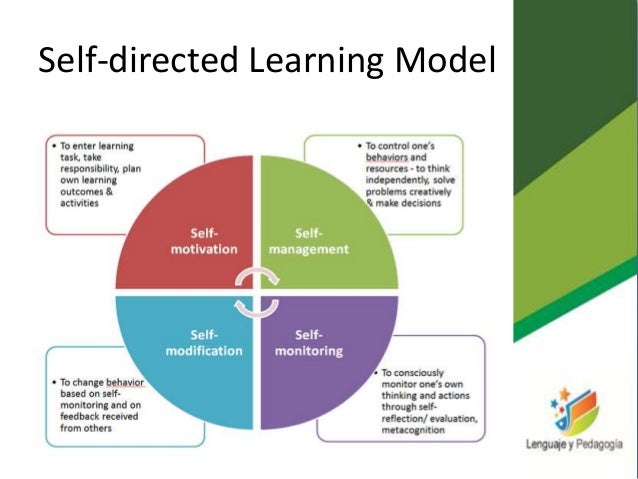
This week I was able to study the idea of the "self-directed learner". This person strives to not only expand their knowledge through "alternate learning pathways" but also find new and creative ways of communicating their skills to others.
In a world of credentials and degrees this type of learning can be challenging and deciding to take a more conventional route towards learning new skills is sometimes the wise choice. However, it takes a clear understanding of oneself and one's own objectives in order to come to such conclusions.
For any self-directed learner, the following questions should remain at the forefront of the learning process:
- What do you know? What don’t you know?
- How do you achieve goals to learn something new?
- How do you show what you know and can do? How do you tell your story with narratives and              numbers?

(An example of a Self-directed learning model)

Friday, February 5, 2016

Storytelling Week 3: In Dark Corners

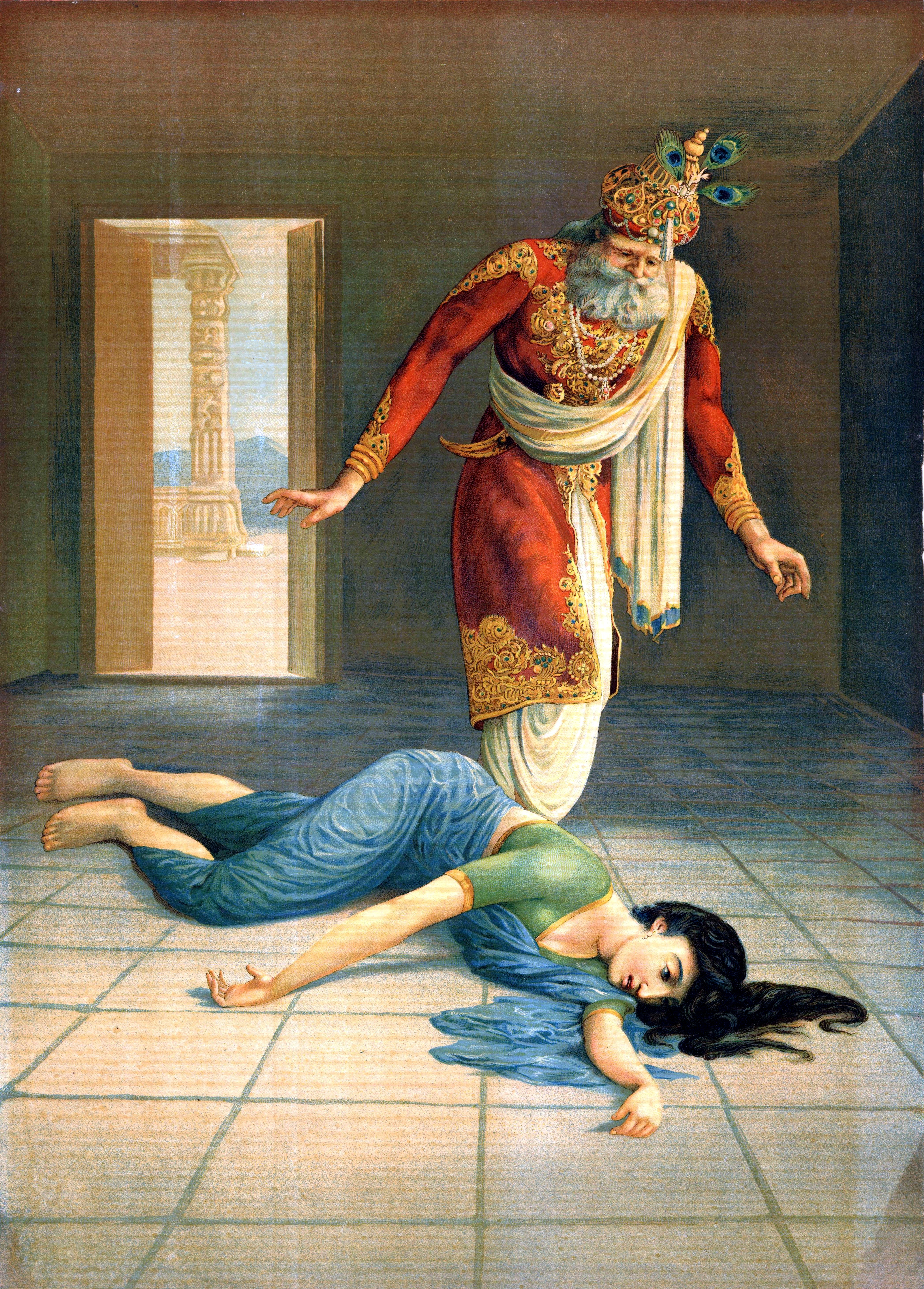
King Dasaratha could not believe his eyes. Before he could even utter a word, his knees buckled bringing him to the ground. 

"...Ka-Kai-Kaik-Kaike" stuttered the king as he struggled to utter her name.

Minister Sumanthra entered the kopa gruha in search of Dasaratha.

"My king, please tell me what has brought you to your knees?" muttered Sumanthra as he cautiously made his way past the curtain.

"We do not have much ti-…. oh no!!" Sumanthra stood in shock as he gazed upon the body of Kaikeyi, soaking in a pool of blood.

Royal guards questioned everyone from the jester to Sumanthra himself. Not a soul could rest that night as the castle fell into chaos. Outraged by the news, Rama and his brothers stormed into the king's chambers expecting to receive orders from their father. Deeply saddened, but determined, the king rushed out of his chambers as quickly as the princes entered.

"There is no time to waste! We must question the last person to witness Kaikeyi alive," said the king.

"Our maids say that they saw a hunchback limping out of the queen's room mere hours before we discovered the body."

And so the king hurried to the cell where soldiers had captured and interrogated Kooni, the hunchbacked servant. As they moved through the castle, the shadows of distraught men, a backdrop to candle light, scurried across the walls of the dark hallway. All throughout the halls men howled and wildly accused the common servants. Rama showed concern for these commoners and resolved any disputes as he saw them. But the chaos was too great.

"Find the killer and this madness will leave us," groaned Dasaratha, looking forward with great resolve.

The guards sliced and bruised Kooni beyond recognition.

"My lord, the hunchback has been devising a trap," said the soldier as he presented the king with notes on Kooni's plot, beaten out of her without mercy.

She was suspended upside down, a rope stretching from the ceiling as her only savior against a container of scorpions resting just inches from her head. As her lips shivered, she forced them open despite the enormous swelling across her face, so severe that she could no longer see two feet ahead of her body.

"I-I-It is surely," blurted Kooni while coughing uncontrollably, "your own evils which have caused this misfortune to f-fa-fall upon you."All eyes in the room were on her.

"I was not the one who cut down Kaikeyi, but surely it was one of my brothers."

Kooni and the other slaves had been planning a revolt. The king had spent years abusing them, forcing them into dangerous lands virtually unprotected to harvest crops.

"We are less than human to you. So we shall treat you like the monsters that you yourself have created!"

Upon hearing these words, a great anger welled up inside Dasaratha as he shoved even his sons aside, making his way to this battered woman. After striking her across the face, he exclaimed,

"You dare murder Kaikeyi for your petty grievances! You creatures were blessed to stumble upon my kingdom. For in any other you would have been pierced through the heart and fed to the dogs. It was the queen herself who took pity on you and now she has paid greatly for her kindness."

And as quickly as it rose up inside him, the king subdued his anger, replacing it instead with an overwhelming sadness. Despite his words he was unwilling to face Rama who was ignorant of the servants' plight, now gazing upon his father with a look of shame and disgust. Later that night, the king stood on the highest balcony of the castle gazing upon the stars for an answer.

"What do I need to do for this kingdom, for my beloved Kaikeyi?" he thought to himself.

Suddenly, Dasaratha heard footsteps, the sound growing louder with each second. He spun around and stared at the door which sealed the only staircase. Dasaratha gripped the hilt of his sword, preparing for a battle without a single ally. He could almost taste the malice in the air as the presence grew closer. As the door swung open, the king released a sigh of relief as none other than Rama stood at the entrance with a faint smile. Surely, the king had reached news levels of paranoia.

"You have done a great many wrongs against these slaves," said Rama. "Just as you mourn, my heart also aches for Mother. But we cannot ignore the plight of these rebels."

Facing the stars once more Dasaratha stood at the edge of the balcony. "I am truly blessed to bear witness to your kindness, Rama. But what do you suppose I do with subjects who have turned traitor?"

"The answer is simple, Father." replied Rama. "In fact there is but one answer that will deliver justice."

"But what could that be, my so-”, as the words left his mouth, the king noticed a sharp, warm sensation in his chest.

 As he looked down, to his dismay he gazed upon the tip of a blade, plunged through his heart. Blood gushed out of his mouth and splashed on the blade. He used his last ounce of energy to spin around and drop himself into the arms of Rama.

"Tell me, my son, what demon has possessed you?" muttered Dasaratha as the blood gurgled in his mouth.

"I simply grow tired of this charade," replied Rama. "The charade of the perfect son, husband, brother and prince. This image of perfection that has been imposed on me is but a farce used to compensate you all for your own dark hearts. No more, Father."

Those were Rama’s final words to Dasaratha, and in his final moments he bore witness to a sight that terrified him. It was Rama’s sinister smile, stretching unnaturally from ear to ear. His eyes stretched open grotesquely, almost popping out of Rama’s head.

(Rama deformed by his madness)

Author's Note

I was inspired to write this story by a previous post that I had made concerning the relationship between Kooni and the queen. While studying their conversations for the first time I could not help but think that if this story was anything like the mystery novels that I have read that there would be an ulterior motive to Kooni's influence in this scene. In imagining what that motive could be I thought of a rebellion. But the challenge of revealing a surprising yet convincing murderer was still unresolved. After much thinking I figured that Rama would be seen as the most innocent character in this story because of the impressions created of him in the original story by the other readers in the class. I also concluded that realistically any person could feel crushed by the expectations placed on Rama. They may even feel robbed of a satisfying life because of these expectations.
The story is also meant to confront the idea of perfection. Throughout the original narrative, the reader notices that even Rama can sometimes fall victim to his desires and make hasty decisions. But somehow Rama is able to justify his own actions. Even the murder of Vali at Rama’s hands is justified in some manner. Therefore, the following question prevails,

“Is perfection the ability to know all answers coupled with the timely execution of deeds, or is perfection simply the ability to convince others of the righteousness of one’s actions?”

Original Text
"The Ramayana" by R. K. Narayan

Bibliography
Manthara and Kaikeyi (PDE story is slightly different from Narayan's physical text)

Kaikeyi and Dasaratha (Spellings may differ between PDE and physical text which was used for the story)

Week 3 Reading Diary: Ascension to the Throne:


Thursday, February 4, 2016

Week 3 Reading Diary: Ascension to the Throne

Before Rama can perform the ceremony to officially become king of Ayodhya, he is exiled through the fulfillment of a promise made to Kaikeyi by the king Dasaratha. While this sinister plot depicts a challenging chronicle in the life of Rama and his loved ones, the exchange between Kooni and Kaikeyi introduces some interesting elements to the story.
Kooni is the hunchback who convinces the queen that Rama's rise to power puts her position in great peril. However, this exchange is depicted in a comedic fashion as we see Kooni frustrated at the innocence of the queen in supporting the king's decision to place Rama at the throne. As the hunchback's predictions are eagerly rebuffed by the queen, the author describes Kooni's  bodily expressions in quite an exaggerated manner. Kooni's impatience with Kaikeyi is comedic as her body language combined with the queen's response to her actions presents the hunchback as the wiser of the two characters.
(Kaikeyi, in the kopa gruha.)
Supposedly, only the servant can see a plot unfolding to which the queen is oblivious and laments at the treachery being performed against a queen as innocent as "a little dove flitting at the jaws of a wildcat". Kooni's condescension only adds to the humor in this scene.
The reader may observe that Kaikeyi in particular is presented as having a significant number of hunchbacks and deformed humans in her service. And so the author depicts an interested dynamic between the servant and Kaikeyi that may represent a symbolic meaning for the queen's position in Ayodhya.

Wednesday, February 3, 2016

Week 3 Reading Diary: Narayan's "The Ramayana"

Throughout Narayan's "The Ramayana", the passage of time is stretched tens of thousands of years, giving the reader a false impression of immediacy in the story. Perhaps this is meant to highlight the longevity of the both the characters and their motivations, delivering a strong sense of tradition in the process.
The intentions of major characters in Viswamithra's stories to Rama often reflect a morals or values that are timeless. Bhagiratha, for the sake of bringing salvation to his ancestors, prayed to the gods and fasted for thirty thousand years so that the Ganges river could be brought to earth. Honoring one's family through discipline and responsibility seems to be a key theme in this story, reflecting values that are meant to persist through the generations.


(Bhagiratha witnessing Shiva receive the impact of the Ganges.)

When the god Indra covets Brahma's creation Ahalya so intensely that he transforms into her husband to deceive her, the sage Gautama delivers a severe and lasting punishment. Retribution, even for gods can be observed in these Indian epics but this story is peculiar in that a god is soundly beaten by a human. The gods are described as having divine obligations that extend beyond the capabilities of man. And yet, we see that the gods are sometimes at the mercy of humans and even portrayed as their ethically inferior counterparts.

In this sense the gods may be seen as personifications for the thoughts and feelings that drive humans, often feelings that must be subdued in order to overcome one’s own weaknesses. This idea allows for a reading of the text that gives the impression that Rama himself is meant to learn and mature from hearing these stories while also being doomed to fall victim to his own cautionary tale.